Thursday, June 28, 2012

Injecting life-saving oxygen into a vein

Patients unable to breathe because of acute lung failure or an obstructed airway need another way to get oxygen to their blood -- and fast -- to avoid cardiac arrest and brain injury. Medical researchers have designed tiny, gas-filled microparticles that can be injected directly into the bloodstream to quickly oxygenate the blood.

The microparticles consist of a single layer of lipids (fatty molecules) that surround a tiny pocket of oxygen gas, and are delivered in a liquid solution. In a cover article in the June 27 issue of Science Translational Medicine, John Kheir, MD, of the Department of Cardiology at Boston Children's Hospital, and colleagues report that an infusion of these microparticles into animals with low blood oxygen levels restored blood oxygen saturation to near-normal levels, within seconds.


When the trachea was completely blocked -- a more dangerous "real world" scenario -- the infusion kept the animals alive for 15 minutes without a single breath, and reduced the incidence of cardiac arrest and organ injury.

The microparticle solutions are portable and could stabilize patients in emergency situations, buying time for paramedics, emergency clinicians or intensive care clinicians to more safely place a breathing tube or perform other life-saving therapies, says Kheir.

"This is a short-term oxygen substitute -- a way to safely inject oxygen gas to support patients during a critical few minutes," he says. "Eventually, this could be stored in syringes on every code cart in a hospital, ambulance or transport helicopter to help stabilize patients who are having difficulty breathing."

The microparticles would likely only be administered for a short time, between 15 and 30 minutes, because they are carried in fluid that would overload the blood if used for longer periods, Kheir says.
Kheir also notes that the particles are different from blood substitutes, which carry oxygen but are not useful when the lungs are unable to oxygenate them. Instead, the microparticles are designed for situations in which the lungs are completely incapacitated.

Kheir began investigating the idea of injectable oxygen in 2006, after caring for a little girl who sustained a severe brain injury resulting from a severe pneumonia that caused bleeding into her lungs and severely low oxygen levels. Despite the team's best efforts, she died before they could place her on a heart-lung machine. Frustrated by this, Kheir formed a team to search for another way to deliver oxygen.
"Some of the most convincing experiments were the early ones," he says. "We drew each other's blood, mixed it in a test tube with the microparticles, and watched blue blood turn immediately red, right before our eyes."

Over the years, Kheir and his team have tested various concentrations and sizes of the microparticles to optimize their effectiveness and to make them safe for injection. "The effort was truly multidisciplinary," says Kheir. "It took chemical engineers, particle scientists and medical doctors to get the mix just right."
In the studies reported in the paper, they used a device called a sonicator, which uses high-intensity sound waves to mix the oxygen and lipids together. The process traps oxygen gas inside particles averaging 2 to 4 micrometers in size (not visible without a microscope). The resulting solution, with oxygen gas making up 70 percent of the volume, mixed efficiently with human blood.

"One of the keys to the success of the project was the ability to administer a concentrated amount of oxygen gas in a small amount of liquid," Kheir says. "The suspension carries three to four times the oxygen content of our own red blood cells." Intravenous administration of oxygen gas was tried in the early 1900s, but these attempts failed to oxygenate the blood and often caused dangerous gas embolisms.

"We have engineered around this problem by packaging the gas into small, deformable particles," Kheir explains. "They dramatically increase the surface area for gas exchange and are able to squeeze through capillaries where free gas would get stuck."

The study was funded by three awards from the Technology Development Fund at Boston Children's Hospital Boston and a U.S. Department of Defense Basic Research Award to Kheir.


Story Source:
The above abstract is republished from materials provided by Newsroom, Bosten children's Hospital.
Note: please contact the source cited above

Wednesday, June 27, 2012

Dieting? Study challenges notion that a calorie is just a calorie

A new study challenges the notion that "a calorie is a calorie." The study finds diets that reduce the surge in blood sugar after a meal -- either low-glycemic index or very-low carbohydrate -- may be preferable to a low-fat diet for those trying to achieve lasting weight loss.

Weight re-gain is often attributed to a decline in motivation or adherence to diet and exercise, but biology also plays an important role. After weight loss, the rate at which people burn calories (known as energy expenditure) decreases, reflecting slower metabolism. Lower energy expenditure adds to the difficulty of weight maintenance and helps explain why people tend to re-gain lost weight.

Prior research by Ebbeling and Ludwig has shown the advantages of a low glycemic load diet for weight loss and diabetes prevention, but the effects of these diets during weight loss maintenance has not been well studied. Research shows that only one in six overweight people will maintain even 10 percent of their weight loss long-term.

The study suggests that a low-glycemic load diet is more effective than conventional approaches at burning calories (and keeping energy expenditure) at a higher rate after weight loss. "We've found that, contrary to nutritional dogma, all calories are not created equal," says Ludwig, also director of the Optimal Weight for Life Clinic at Boston Children's Hospital. "Total calories burned plummeted by 300 calories on the low fat diet compared to the low carbohydrate diet, which would equal the number of calories typically burned in an hour of moderate-intensity physical activity," he says.

Each of the study's 21 adult participants (ages 18-40) first had to lose 10 to 15 percent of their body weight, and after weight stabilization, completed all three of the following diets in random order, each for four weeks at a time. The randomized crossover design allowed for rigorous observation of how each diet affected all participants, regardless of the order in which they were consumed:

          A low-fat diet,which reduces dietary fat and emphasizes whole grain products and a variety of fruits and vegetables, composed of 60 percent of daily calories from carbohydrates, 20 percent from fat and 20 percent from protein.

          A low-glycemic index diet made up of minimally processed grains, vegetables, healthy fats, legumes and fruits, with 40 percent of daily calories from carbohydrates, 40 percent from fat and 20 percent from protein. Low glycemic index carbohydrates digest slowly, helping to keep blood sugar and hormones stable after the meal.

         A low-carbohydrate diet, modeled after the Atkins diet, composed of 10 percent of daily calories from carbohydrates, 60 percent from fat and 30 percent from protein.

The study used state-of-the-art methods, such as stable isotopes to measure participants' total energy expenditure, as they followed each diet.

Each of the three diets fell within the normal healthy range of 10 to 35 percent of daily calories from protein. The very low-carbohydrate diet produced the greatest improvements in metabolism, but with an important caveat: This diet increased participants' cortisol levels, which can lead to insulin resistance and cardiovascular disease. The very low carbohydrate diet also raised C-reactive protein levels, which may also increase risk of cardiovascular disease.

Though a low-fat diet is traditionally recommended by the U.S. Government and Heart Association, it caused the greatest decrease in energy expenditure, an unhealthy lipid pattern and insulin resistance. "In addition to the benefits noted in this study, we believe that low-glycemic-index diets are easier to stick to on a day-to-day basis, compared to low-carb and low-fat diets, which many people find limiting," says Ebbeling. "Unlike low-fat and very- low carbohydrate diets, a low-glycemic-index diet doesn't eliminate entire classes of food, likely making it easier to follow and more sustainable."

Story Source:
The above abstract is republished from materials provided by Newsroom, Bosten children's Hospital.
Note: please contact the source cited above

Monday, June 25, 2012

Reversible doping: Hydrogen flips switch on vanadium oxide


If you are not a condensed matter physicist, vanadium oxide (VO2) may be the coolest material you've never heard of. It's a metal. It's an insulator. It's a window coating and an optical switch. And thanks to a new study by physicists at Rice University, scientists have a new way to reversibly alter VO2's electronic properties by treating it with one of the simplest substances -- hydrogen.


So what is VO2? It's an oxidized form of the metal vanadium, an ingredient in hardened steel. When oxygen reacts with vanadium to form VO2, the atoms form crystals that look like long rectangular boxes. The vanadium atoms line up along the four edges of the box in regularly spaced rows. A single crystal of VO2 can have many of these boxes lined up side by side, and the crystals conduct electricity like wire as long as they are kept warm.

"The weird thing about this material is that if you cool it, when you get to 67 degrees Celsius, it goes through a phase transition that is both electronic and structural," said Rice's Douglas Natelson, lead co-author of the study in this week's Nature Nanotechnology. "Structurally, the vanadium atoms pair up and each pair is slightly canted, so you no longer have these long chains. When the phase changes, and these pairings take place, the material changes from being a electrical conductor to an electrical insulator."

While other materials exhibit a similar electronic about-face, VO2 is unique in that the change occurs at a relatively modest temperature -- around 153 degrees Fahrenheit -- and sometimes at incredible speed -- less than a trillionth of second. In recent years, scientists have put these quirky properties to work. In 2004, a group in London used VO2 to design a temperature-sensitive window coating that could absorb sunlight on cold days and turn reflective on hot days. And electronics researchers are also working to create optical switches from VO2.

"As an experimental physicist, VO2 is intriguing because the detailed physics of the material are still not well understood, and theoretical models alone cannot give us the answers," said Natelson, professor of physics and astronomy and of electrical and computer engineering at Rice. "Experiments are key to understanding this."

In 2010, Natelson and postdoctoral research associate Jiang Wei began to systematically study the phase changes in VO2. Wei and graduate student Heng Ji began by using a process called vapor deposition to grow VO2 wires that were about 1,000 times smaller than a human hair. One set of experiments on wires that had been baked in the presence of hydrogen gas returned particularly odd readings. Wei, Ji and Natelson determined that the hydrogen was apparently modifying the VO2 nanowires, but only those in contact with metal electrodes.

"The gold electrodes we were using to supply current to the experiment were acting as a catalyst that split the hydrogen gas molecules into atomic hydrogen, which could then diffuse into channels in the VO2," Natelson said. "It appears that the hydrogen is taken up into the VO2 crystals, and this changes their electronic properties. If a little hydrogen is added, the phase transition happens at a slightly lower temperature, and the insulating phase becomes more conductive. If enough hydrogen is added, the transition to the insulating phase disappears altogether."

To gain insight into just how the hydrogen is able to alter the transition, the experimenters consulted with theoretical physicist Andriy Nevidomskyy, assistant professor of physics and astronomy at Rice. Nevidomskyy's calculations showed that the hydrogen changes the amount of charge in the VO2 material and also forces the crystal to expand slightly. Both of these effects favor the metallic state.

This is not the first time physicists have lowered the transition temperature of VO2 by adding other materials -- a technique known as "doping." But Natelson said Rice's hydrogen doping is unique in that it is completely reversible: To remove the hydrogen, the material simply has to be baked in an oven at moderate temperature.

"On the applied side, there may be a number of applications for this, like ultrasensitive hydrogen sensors," Natelson said. "But the more immediate payoff will likely be in helping us to better understand the physics involved in the VO2 phase transition. If we can find out exactly how much hydrogen is required to shut down the transition, then we will have a knob that we can turn to systematically raise or lower the temperature in future experiments.

Thursday, June 21, 2012

Apple peel compound boosts brown fat, reduces obesity in mice


Obesity and its associated problems such as diabetes and fatty liver disease are increasingly common global health concerns. A new study shows that a natural substance found in apple peel can partially protect mice from obesity and some of its harmful effects.

The findings suggest that the substance known as ursolic acid reduces obesity and its associated health problems by increasing the amount of muscle and brown fat, two tissues recognized for their calorie-burning properties.
The study, which was published June 20 in the journal PLoS ONE, was led by Christopher Adams, M.D., Ph.D., UI associate professor of internal medicine and a Faculty Scholar at the Fraternal Order of Eagles Diabetes Research Center at the UI.

thumbnail
In mice fed a high fat diet, ursolic acid increases
skeletal muscle Akt signaling,
 anabolic mRNA expression, grip strength,
 skeletal muscle mass, and
fast and slow skeletal muscle fiber size.
"From previous work, we knew that ursolic acid increases muscle mass and strength in healthy mice, which is important because it might suggest a potential therapy for muscle wasting," Adams says. "In this study, we tested ursolic acid in mice on a high-fat diet -- a mouse model of obesity and metabolic syndrome. Once again, ursolic acid increased skeletal muscle. Interestingly, it also reduced obesity, pre-diabetes and fatty liver disease.

"Since muscle is very good at burning calories, the increased muscle in ursolic acid-treated mice may be sufficient to explain how ursolic acid reduces obesity. However, we were surprised to find that ursolic acid also increased brown fat, a fantastic calorie burner. This increase in brown fat may also help protect against obesity."

Until quite recently, researchers believed that only infants had brown fat, which then disappeared during childhood. However, improved imaging techniques have shown that adults do retain a very small amount of the substance mostly in the neck and between the shoulder blades. Some studies have linked increased levels of brown fat with lower levels of obesity and healthier levels of blood sugar and blood lipid, leading to the suggestion that brown fat may be helpful in preventing obesity and diabetes.

The UI team, which also included Steven Kunkel, Christopher Elmore, Kale Bongers, Scott Ebert, Daniel Fox, Michael Dyle, and Steven Bullard, studied mice on a high-fat diet over a period of several weeks. Half of the animals also received ursolic acid in their high-fat food. Interestingly, mice whose diet included ursolic acid actually ate more food than mice not getting the supplement, and there was no difference in activity between the two groups. Despite this, the ursolic acid-treated mice gained less weight and their blood sugar level remained near normal. Ursolic acid-treated mice also failed to develop obesity-related fatty liver disease, a common and currently untreatable condition that affects about one in five American adults.

Further study showed that ursolic acid consumption increased skeletal muscle, increasing the animals' strength and endurance, and also boosted the amount of brown fat. Because both muscle and brown fat burn calories, the researchers investigated energy expenditure in the mice and showed that ursolic acid-fed mice burned more calories than mice that didn't get the supplement.

"Our study suggests that ursolic acid increases skeletal muscle and brown fat leading to increased calorie burning, which in turn protects against diet-induced obesity, pre-diabetes and fatty liver disease," Adams says. "Brown fat is beneficial and people are trying to figure out ways to increase it. At this point, we don't know how ursolic acid increases brown fat, or if it increases brown fat in healthy mice. And, most importantly, we don't know if ursolic acid will benefit people. Our next step is to determine if ursolic acid can help patients."

The research was supported by funding from the Fraternal Order of Eagles Diabetes Research Center at the University of Iowa, the National Institute of Arthritis and Musculoskeletal and Skin Diseases of the National Institutes of Health (grant 5R01AR059115-03), the Department of Veterans Affairs, and the University of Iowa Research Foundation.

Story Source:
The above abstract is republished from materials provided by Newswise.
Note: please contact the source cited above


Monday, June 18, 2012

Ionic liquid improves speed and efficiency of hydrogen-producing catalyst

Ni for Nickel
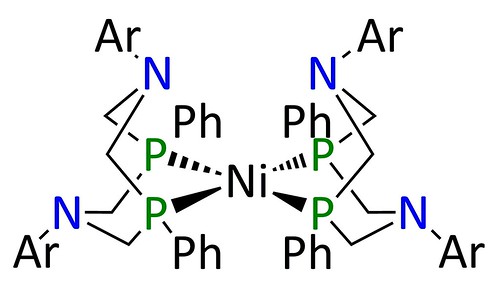
Combined with an acidic ionic liquid,
this catalyst can make hydrogen
gas fast and efficiently.
The design of a nature-inspired material that can make energy-storing hydrogen gas has gone holistic. Usually, tweaking the design of this particular catalyst -- a work in progress for cheaper, better fuel cells -- results in either faster or more energy efficient production but not both. Now, researchers have found a condition that creates hydrogen faster without a loss in efficiency.


And, holistically, it requires the entire system, the hydrogen-producing catalyst and the liquid environment in which it works — to overcome the speed-efficiency tradeoff. The results, published online June 8 in the Proceedings of the National Academy of Sciences, provide insights into making better materials for energy production.

"Our work shows that the liquid medium can improve the catalyst's performance," said chemist John Roberts of the Center for Molecular Electrocatalysis at the Department of Energy's Pacific Northwest National Laboratory. "It's an important step in the transformation of laboratory results into useable technology."

The results also provide molecular details into how the catalytic material converts electrical energy into the chemical bonds between hydrogen atoms. This information will help the researchers build better catalysts, ones that are both fast and efficient, and made with the common metal nickel instead of expensive platinum.

A Solution Solution

The work explores a type of dissolvable nickel-based catalyst, which is a material that eggs on chemical reactions. Catalysts that dissolve are easier to study than fixed catalysts, but fixed catalysts are needed for most real-world applications, such as a car's pollution-busting catalytic converter. Studying the catalyst comes first, affixing to a surface comes later.

In their search for a better catalyst to produce hydrogen to feed into fuel cells, the team of PNNL chemists modeled this dissolvable catalyst after a protein called a hydrogenase. Such a protein helps tie two hydrogen atoms together with electrons, storing energy in their chemical bond in the process. They modeled the catalytic center after the protein's important parts and built a chemical scaffold around it.

In previous versions, the catalyst was either efficient but slow, making about a thousand hydrogen molecules per second; or inefficient yet fast — clocking in at 100,000 molecules per second.  (Efficiency is based on how much electricity the catalyst requires.) The previous work didn't get around this pesky relation between speed and efficiency in the catalysts — it seemed they could have one but not the other.

Hoping to uncouple the two, Roberts and colleagues put the slow catalyst in a medium called an acidic ionic liquid. Ionic liquids are liquid salts and contain molecules or atoms with negative or positive charges mixed together. They are sometimes used in batteries to allow for electrical current between the positive and negative electrodes.

The researchers mixed the catalyst, the ionic liquid, and a drop of water. The catalyst, with the help of the ionic liquid and an electrical current, produced hydrogen molecules, stuffing some of the electrons coming in from the current into the hydrogen's chemical bonds, as expected.

As they continued to add more water, they expected the catalyst to speed up briefly then slow down, as the slow catalyst in their previous solvent did. But that's not what they saw.

"The catalyst lights up like a rocket when you start adding water," said Roberts.

The rate continued to increase as they added more and more water. With the largest amount of water they tested, the catalyst produced up to 53,000 hydrogen molecules per second, almost as fast as their fast and inefficient version.

Importantly, the speedy catalyst stayed just as efficient when it was cranking out hydrogen as when it produced the gas more slowly. Being able to separate the speed from the efficiency means the team might be able to improve both aspects of the catalyst.

Liquid Protein

The team also wanted to understand how the catalyst worked in its liquid salt environment. The speed of hydrogen production suggested that the catalyst moved electrons around fast. But something also had to be moving protons around fast, because protons are the positively charged hydrogen ions that electrons follow around. Just like on an assembly line, protons move through the catalyst or a protein such as hydrogenase, pick up electrons, form bonds between pairs to make hydrogen, then fall off the catalyst.

Additional tests hinted how this catalyst-ionic liquid set-up works. Roberts suspects the water and the ionic liquid collaborated to mimic parts of the natural hydrogenase protein that shuffled protons through. In these proteins, the chemical scaffold holding the catalytic center also contributes to fast proton movement. The ionic liquid-water mixture may be doing the same thing.

Next, the team will explore the hints they gathered about why the catalyst works so fast in this mixture. They will also need to attach it to a surface. Lastly, this catalyst produces hydrogen gas. To create a fuel technology that converts electrical energy to chemical bonds and back again, they also plan to examine ionic liquids that will help a catalyst take the hydrogen molecule apart.

The Center for Molecular Electrocatalysis at PNNL is one of 46 Energy Frontier Research Centers supported by the U.S. Department of Energy Office of Science at national laboratories, universities, and other institutions across the country to accelerate basic research related to energy.

Reference: Douglas H. Pool, Michael P. Stewart, Molly O'Hagan, Wendy J. Shaw, John A. S. Roberts, R. Morris Bullock, and Daniel L. DuBois, 2012. An Acidic Ionic Liquid/Water Solution as Both Medium and Proton Source for Electrocatalytic H2 Evolution by [Ni(P2N2)2]2+ Complexes, Proc Natl Acad Sci U S A Early Edition online the week of June 8, DOI 10.1073/pnas.1120208109. (http://www.pnas.org/content/early/2012/06/07/1120208109)

Story Source:
The above abstract is republished from materials provided by Pacific Northwest National Laboratory
Note: please contact the source cited above

Thursday, June 14, 2012

Novel mechanism involved in key immune response

Scientists have identified a novel way that a common virus, called adenovirus, causes disease. In doing so, they have discovered important information on one of the body's key immune responses. Their findings may have implications for infectious diseases and cancer.


Transmission electron micrograph
 of two adenovirus particles

Adenovirus infections most often cause mild illnesses of the respiratory system, resulting in runny noses, coughs and sore throats. However, researchers have been interested in adenoviruses since the 1960s, when it was discovered that they can cause tumors in rodents. These tumors arise because adenovirus infected cells divide uncontrollably and escape the immune response, which are hallmarks of cancer.

One key component of antiviral immunity is interferon. "Interferons are proteins made and released by cells in response to the presence of viruses, bacteria, parasites or cancers," says Dr. Joseph Mymryk, a scientist at Lawson and a tumor virologist at London Health Sciences Centre. "Adenovirus is completely resistant to interferon."

Past studies have identified some of the ways in which adenovirus overcomes the interferon response, but Dr. Mymryk and Greg Fonseca, PhD Candidate and lead author on the study, have identified a new mechanism that relies on changes in epigenetic regulation. Epigenetics is an emerging field of study which involves non-genetic factors that cause an organism's genes to express differently.

The production of interferons is responsible for the majority of symptoms commonly associated with viral infection including fever, chills, muscle aches, and malaise. When a cell is exposed to interferon it increases the production of about 300 cellular genes that defend the cell from infection. The researchers have discovered that interferon-regulated genes require a specific epigenetic modification called monoubiquitination of histone 2B (H2B) to work. "There is still much to learn about this modification, but our studies are the first to show that it is absolutely required for the interferon response," says Fonseca. "This finding was totally unanticipated."

"Each cell has thousands of different genes and they can all be regulated in weird and wonderful ways," says Dr. Mymryk. "The monoubiquitination of H2B specifically results in large increases in the transcription of genes. We found that the interferon response uses this modification for the rapid increases in gene transcription (which leads to gene expression) that are needed to change the cell environment to respond to and stop the viral infection. 

The research institute of London Health Sciences Centre and St. Joseph's Health Care, London.
virus does is essentially block the formation of the complex that performs the monubiquitination of H2B, thereby blocking its function."

Although the medical consequences of adenovirus are typically modest, the study's findings have implications in a broad range of diseases because of how influential the interferon response is to how we respond to infectious diseases and cancer.

"Many cancers are non-responsive to interferon," says Fonseca. "If we can more fully understand the mechanism of interferon response, we may be able to better treat these cancers. Overall, many of the tricks adenovirus uses may be similar to those used by other viruses and cancer cells."

Dr. Mymryk is also Professor in the Departments of Microbiology and Immunology, and Oncology at Western's Schulich School of Medicine & Dentistry.

Story Source:
The above abstract is republished from materials provided by Lawson Health Research Institute.
Note: please contact the source cited above 
Wednesday, June 13, 2012

Protein residues kiss, don't tell: Genomes reveal contacts, scientists refine methods for protein-folding prediction

Researchers have created a computational tool to help predict how proteins fold by finding amino acid pairs that are distant in sequence but change together. Protein interactions offer clues to the treatment of disease, including cancer.


The Rice University biophysicist and his team have created a tool to do just that for proteins and, in the process, have advanced the art of predicting their form and function.


In this case, the dots are amino acid molecules known as residues that link together in chains to form proteins. Proteins are the workhorses that carry out the biological tasks essential to every living thing, but before they can go to work, they fold. Each protein has its own characteristic, folded shape, and various diseases, including cancer, have been linked to proteins that misfold or otherwise misbehave.

As computers grew more powerful over the past three decades, scientists have created many methods to predict how a particular chain of residues is likely to fold and the purpose the resulting protein serves.


Story Source:
The above abstract is republished from materials provided by Rice University.
Note: please contact the source cited above 

Tuesday, June 12, 2012

Workings behind promising inexpensive catalyst revealed

A newly developed carbon nanotube material could help lower the cost of fuel cells, catalytic converters and similar energy-related technologies by delivering a substitute for expensive platinum catalysts.

The precious metal platinum has long been prized for its ability to spur key chemical reactions in a process called catalysis, but at more than $1,000 an ounce, its high price is a limiting factor for applications like fuel cells, which rely on the metal.

A carbon nanotube complex with promise as a cheap catalyst was thought to have nitrogen and iron impurities that lend the material its desirable chemical properties. Electron microscopy at Oak Ridge National Laboratory confirmed that the material's structure incorporates many heavy atoms, such as the iron atoms circled in red.
A carbon nanotube complex with promise as a cheap catalyst
was thought to have nitrogen and iron impurities that
lend the material its desirable chemical properties.
Electron microscopy at Oak Ridge National Laboratory
 confirmed that the material's structure incorporates
many heavy atoms, such as the iron atoms circled in re
d.
In a search for an inexpensive alternative, a team including researchers from the Department of Energy's Oak Ridge National Laboratory turned to carbon, one of the most abundant elements. Led by Stanford University's Hongjie Dai, the team developed a multi-walled carbon nanotube complex that consists of cylindrical sheets of carbon.

Once the outer wall of the complex was partially "unzipped" with the addition of ammonia, the material was found to exhibit catalytic properties comparable to platinum. Although the researchers suspected that the complex's properties were due to added nitrogen and iron impurities, they couldn't verify the material's chemical behavior until ORNL microscopists imaged it on an atomic level.


"With conventional transmission electron microscopy, it is hard to identify elements," said team member Juan-Carlos Idrobo of ORNL. "Using a combination of imaging and spectroscopy in our scanning transmission electron microscope, the identification of the elements is straight-forward because the intensity of the nanoscale images tells you which element it is. The brighter the intensity, the heavier the element. Spectroscopy can then identify the specific element. "

ORNL microscopic analysis confirmed that the nitrogen and iron elements were indeed incorporated into the carbon structure, causing the observed catalytic properties similar to those of platinum. The next step for the team is to understand the relationship between the nitrogen and iron to determine whether the elements work together or independently.

The team's findings are published in Nature Nanotechnology as "An oxygen reduction electrocatalyst based on carbon nanotube-graphene complexes." Coauthors on the paper are ORNL's Stephen Pennycook and Juan-Carlos Idrobo, Vanderbilt University's Wu Zhou, Stanford's Yanguang Li, Hailiang Wang, Liming Xie and Yongye Liang, and Tsinghua University's Fei Wei. 

Research was carried out in part at the Shared Equipment Research Facility (ShaRE), a user facility supported by the U.S. Department of Energy, Office of Science; and by the Materials Sciences and Engineering Division in DOE's Office of Basic Energy Sciences. ORNL is managed by UT-Battelle for the Department of Energy's Office of Science. DOE's Office of Science is the single largest supporter of basic research in the physical sciences in the United States, and is working to address some of the most pressing challenges of our time.


Story Source:
The above story is republished from materials provided by ORNL.
Note: please contact the source cited above 

Monday, June 11, 2012

Researchers watch tiny living machines self-assemble

Enabling bioengineers to design new molecular machines for nanotechnology applications is one of the possible outcomes of a new study. Scientists have developed a new approach to visualize how proteins assemble, which may also significantly aid our understanding of diseases such as Alzheimer's and Parkinson's, which are caused by errors in assembly.
Vallée-Bélisle and Michnick have developed a new approach to visualize how proteins assemble, which may also significantly aid our understanding of diseases...
Here shown are two different assembly stages
 (purple and red) of the protein ubiquitin and 
the fluorescent probe used to visualize these stage 
(tryptophan: see yellow).
 Credit: Peter Allen.
 Print resolution available on request

"In order to survive, all creatures, from bacteria to humans, monitor and transform their environments using small protein nanomachines made of thousands of atoms," explained the senior author of the study, Prof. Stephen Michnick of the university's department of biochemistry. "For example, in our sinuses, there are complex receptor proteins that are activated in the presence of different odor molecules. Some of those scents warn us of danger; others tell us that food is nearby." Proteins are made of long linear chains of amino acids, which have evolved over millions of years to self-assemble extremely rapidly -- often within thousandths of a split second -- into a working nanomachine. "One of the main challenges for biochemists is to understand how these linear chains assemble into their correct structure given an astronomically large number of other possible forms," Michnick said.

Story Source:
The above story is republished from materials provided by university of Montreal
Note: please contact the source cited above 

Friday, June 8, 2012

Quantum computers move closer to reality, thanks to highly enriched and highly purified silicon


Scientists have made the next step towards making quantum computing a reality -- through the unique properties of highly enriched and highly purified silicon.

Research involving physicist Mike Thewalt of Simon Fraser University offers a new step towards making quantum computing a reality, through the unique properties of highly enriched and highly purified silicon.

Quantum computers right now exist pretty much in physicists' concepts, and theoretical research. There are some basic quantum computers in existence, but nobody yet can build a truly practical one -- or really knows how.

Such computers will harness the powers of atoms and sub-atomic particles (ions, photons, electrons) to perform memory and processing tasks, thanks to strange sub-atomic properties.

Rubber wood, coconut shells and fabrics tested for use in hybrid composites

Opening a way to a new hybrid composite, researchers have tested hybrid composites made of rubberwood, coconut shell and textile fabrics (woven cotton and polyester fabrics).

Each of the hybrid composite fabricated: Cotton fabric reinforced hybrid composite (CtRHC) and Polyester fabric reinforced hybrid composite (PeHC), was reinforced with two, three and four layers cotton or polyester. The control samples were the composite without any textile fabric reinforcement. 

Flexural strength, impact strength, water absorption and thickness swelling tests were conducted to determine the mechanical and physical properties of the fabricated hybrid composites respectively. 

It was found that the flexural strength of these fabrics reinforced hybrid composites improved as compared to the control sample, which was without textile fabric. The result of flexural modulus of the hybrid composite fabricated demonstrated similar trend with its flexural strength. The flexural modulus of the hybrid composites improved with the presence of textile fabrics. Samples reinforced with textile fabrics exhibited higher values than the control sample. The reinforcement with 4 layers of textile fabric tended to decrease the flexural modulus slightly.

Food-trade network vulnerable to fast spread of contaminan

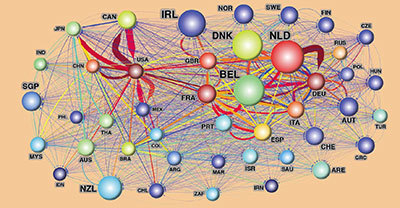
Physicists and food science experts have recently published a rigorous analysis of the international food-trade network that shows the network's vulnerability to the fast spread of contaminants as well as the correlation between known food poisoning outbreaks and the centrality of countries on the network.

Food contamination networkAs the world’s population climbs past 7 billion, the sustainable production and distribution of food is balanced against the need to ensure its chemical and microbiological safety. The new paper maps the international agro-food trade network (IFTN), a highly complex and heterogeneous system formed around a core group of seven countries, each trading with more than 77 percent of the world’s nations. Since any two countries in the IFTN have only two degrees of separation on the network, the IFTN is capable of spreading a foodborne contaminant very efficiently. It also tends to mask the contaminant’s origins once the system is compromised, since so many network paths run through the central nodes. 


Story Source:
The above story is republished from materials provided by university of Notre Dame
Note: please contact the source cited above

Thursday, June 7, 2012

To quit smoking, try eating more veggies and fruits


Eating more fruits and vegetables may help you quit smoking and stay tobacco-free for longer, according to a new study. It is the first longitudinal study on the relationship between fruit and vegetable consumption and smoking cessation.

The paper is the first longitudinal study on the relationship between fruit and vegetable consumption and smoking cessation.


Story Source:
The above story is republished from materials provided by University of Buffalo
Note: please contact the source cited above

AD2

AD1